
Yard & Foundation Drainage Solutions
Stop water before it damages your home or makes your yard unusable. GWM Earthworks diagnoses the real source of the problem—surface runoff, downspouts, high water table, springs, or poor soils—and installs the right fix. From regrading and French drains to dry wells, catch basins, and foundation drains, we build systems for New Hampshire frost conditions with lawful, code‑compliant discharge.
Drainage Solutions & Benefits

Diagnostics First
We identify where the water is coming from and map how it moves through your property.
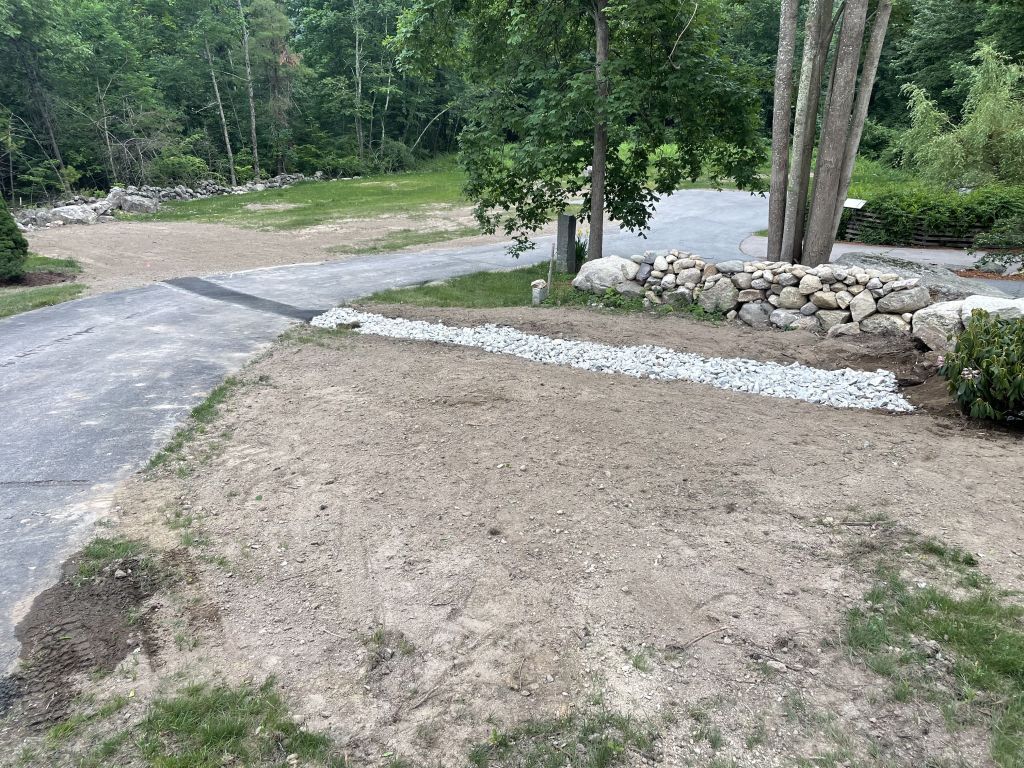
Grading & Swale
Re-contour the surface to direct runoff away from your home and play areas.
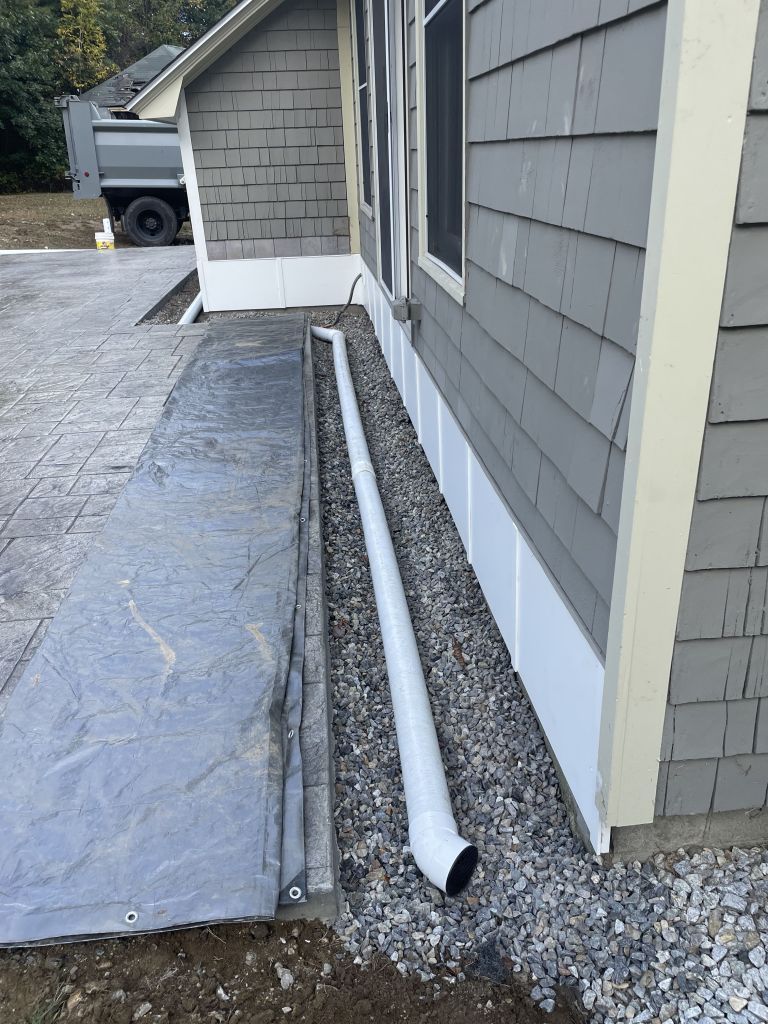
French Drains
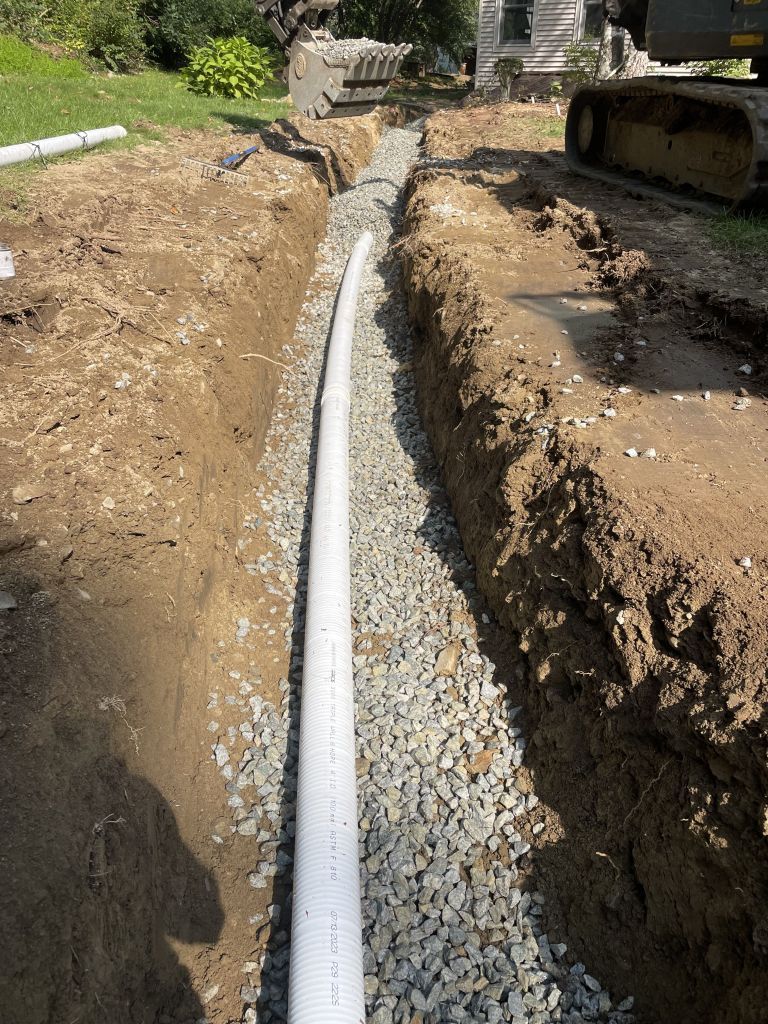
Perforated pipe with clean stone and geotextile to intercept subsurface water and move it to daylight or a dry well.

Winter Safety
Reduce driveway and walkway icing with proper diversion and discharge planning.
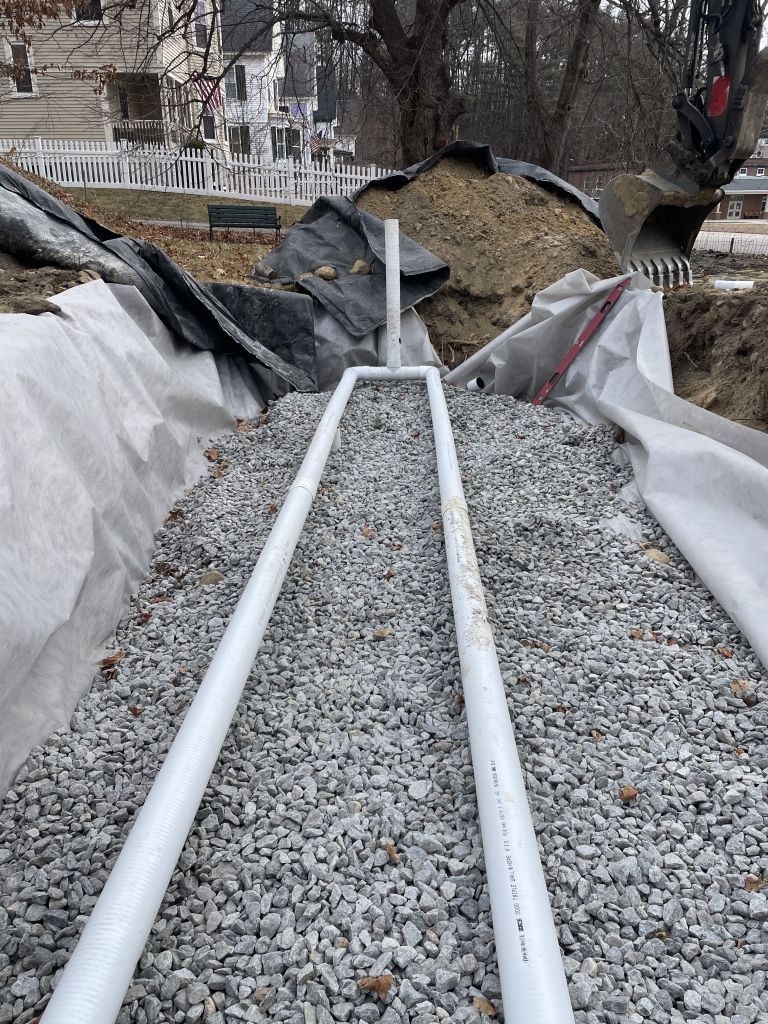
Catch Basins & Dry Wells
Collect and infiltrate water in problem zones; tie downspouts into appropriate systems.

Foundation/Footing Drains
Where suitable, relieve water pressure at the foundation and route water safely.
Diagnosis to Installation
1
Site assessment
Walk the property after rain when possible; review soils, slopes, and structures; verify utilities (call 811).
2
Plan & approvals
Provide a clear plan and notes on any local permits needed for grade changes or discharge near wetlands/ROW.
3
Installation
Excavate to correct depths (below frost where needed); install clean stone and geotextile; maintain proper pipe slope; protect landscape.
4
Restoration
Backfill/compact, regrade, and restore lawn areas; provide simple maintenance advice to keep inlets clear.
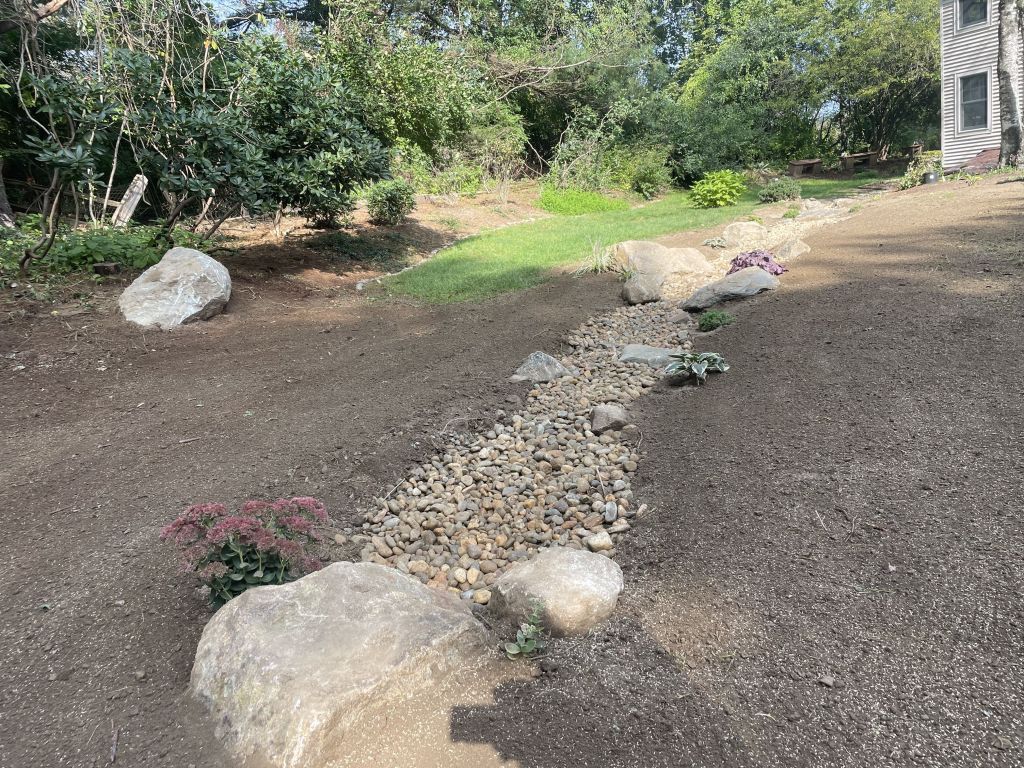
Drainage Project Gallery
Drainage FAQs
Where is the water coming from?
Common sources include roof runoff, uphill neighbor runoff, high water tables, natural springs, and poorly draining soils. We assess each factor during the site visit.
Will I see pipes or grates?
Low-profile inlets and outlets can be used to keep systems discreet. We’ll explain options during planning.
Where does the water go?
To daylight on your property, into a properly sized dry well, or other lawful discharge approved by local rules. We do not discharge onto neighboring properties.
How long does it take?
Most projects install within 1–3 days once scheduled. We’ll provide a clear plan and timeline after assessment.
What maintenance is needed?
Keep surface inlets clear of leaves and debris and watch for root intrusion near older plantings. We’ll explain simple seasonal checks.
Get a Drainage Assessment
Tell us about the symptoms and upload photos if you have them. We’ll respond within 24 hours to plan a site visit and provide a transparent estimate.